

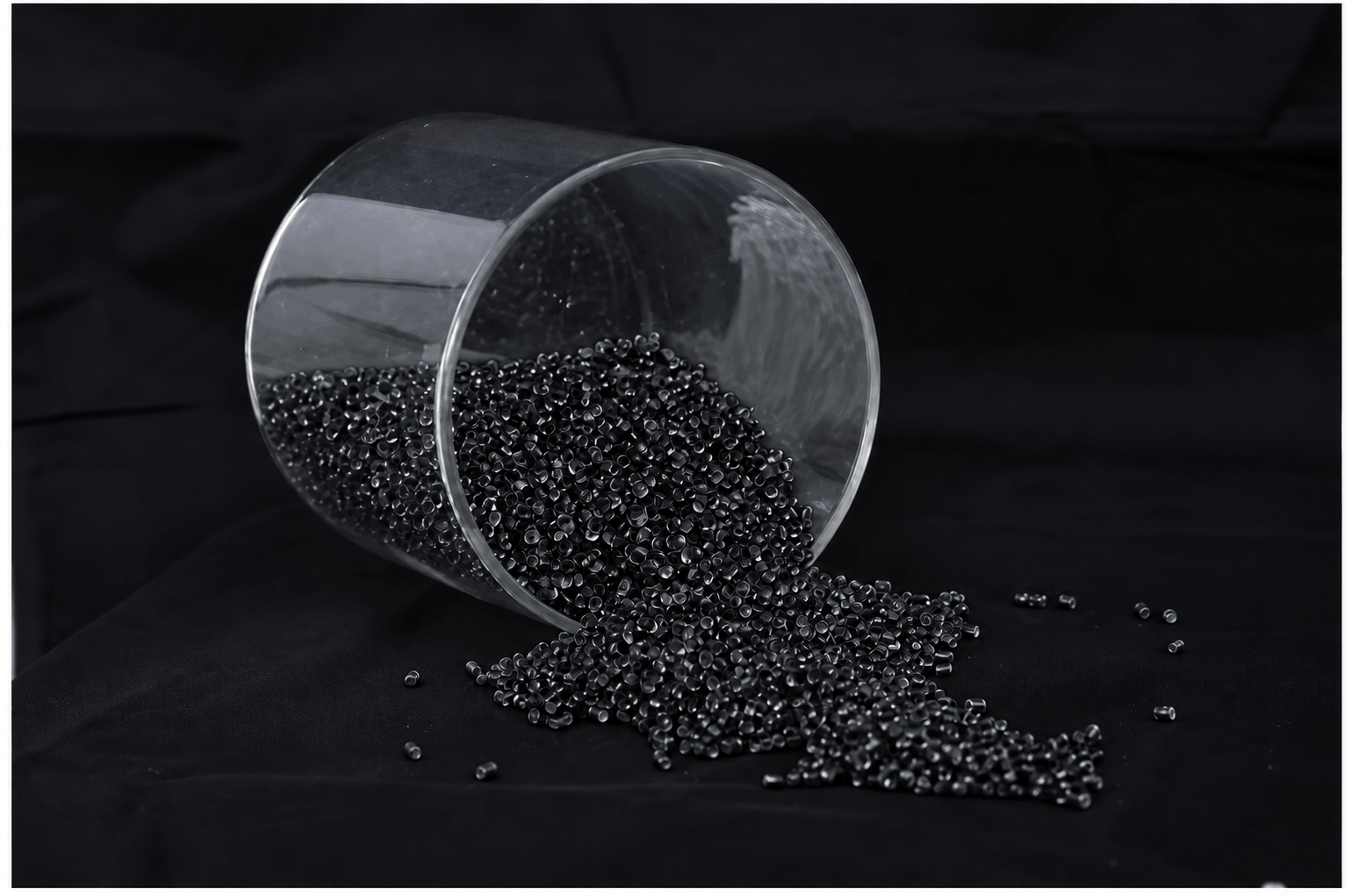
XLPE BLACK — Crosslinkable Polyethylene
XLPE BLACK is a black silane crosslinkable polyethylene insulation compound for low-voltage aerial bundled cables. It is designed for 0.6/1 kV applications requiring long-term outdoor durability.
View detailsProduct category
Our cable compounds are engineered to provide reliable insulation, sheathing and protection for power, communication and industrial cable applications. The portfolio includes HDPE, LLDPE, XLPE and HFFR-based solutions designed for consistent processing and long-term performance.
XLPE BLACK is a black silane crosslinkable polyethylene insulation compound for low-voltage aerial bundled cables. It is designed for 0.6/1 kV applications requiring long-term outdoor durability.
View detailsA bimodal HDPE jacketing compound with 2.5% carbon black — the pigment loading that gives a buried or aerial cable decades of ultraviolet protection rather than a few summers.
View details
HDPE Natural Compound is a non-pigmented polyethylene compound designed for cable insulation and sheathing applications. It provides reliable electrical properties, mechanical durability and consistent processing performance.
View detailsLLDPE Natural Compound is a flexible, non-pigmented material developed for cable insulation and sheathing. It offers good impact resistance, processability and surface quality.
View detailsLLDPE Black is a carbon black reinforced LLDPE compound for outer sheathing of power, control, and telecommunication cables. It offers excellent UV and weather resistance, high ESCR, strong mechanical and impact performance, low water permeability, resistance to petroleum jelly and cable filling compounds, and a wide extrusion processing window.
View detailsSilane-grafted XLPE compound with catalyst masterbatch for insulation of 0.6/1 kV low-voltage power cables
View detailsHFFR compounds are halogen-free flame-retardant materials developed for cables used in buildings, transportation systems and industrial facilities. They help limit flame propagation while reducing smoke and corrosive gas emissions during combustion.
View detailsA cable is a stack of different jobs. Insulation sets the temperature rating and carries the dielectric performance. Sheathing takes the mechanical and environmental punishment. The flame-retardant system determines what happens in a fire — and increasingly, where the cable may be installed at all. Each calls for a different compound.
The conductor rating determines how much current a given cross-section can carry, so it is usually the first constraint. Thermoplastic insulation is generally rated to 70 °C. Our silane-crosslinkable XLPE compound cures with moisture after extrusion, lifting that to a 90 °C continuous rating without the curing tube that peroxide systems require — which is why silane is the standard route for low-voltage cable.
Where colour coding is applied at the extruder, natural HDPE and natural LLDPE serve as the base compound.
Both are polyethylene; their short-chain branching differs and so does the property balance. HDPE black is harder, stiffer, more abrasion-resistant and less permeable to water — the choice for buried and duct installation. LLDPE black is more flexible, tougher in the cold and markedly more resistant to environmental stress cracking, which matters where a cable is bent tightly and left in wet ground.
Both carry around 2.5% carbon black, which is the loading at which ultraviolet protection is effectively complete. Dispersion matters as much as the figure.
Cable for tunnels, metro systems, rolling stock, data centres and high-occupancy buildings is increasingly specified halogen-free, because burning halogenated material releases hydrogen chloride that obscures escape routes, is corrosive and keeps damaging equipment after the fire. Our HFFR compound uses a mineral flame-retardant system at 55–65% loading on a base polymer chosen for filler acceptance.
The relevant standards are EN 60754-1 and -2 for halogen acid gas and corrosivity, EN 61034-2 for smoke density, and IEC 60332-1 or -3 for flame propagation. They are specified individually because passing one does not imply passing the others.
Where you formulate in-house, the flame retardants, plasticisers and base polymers behind these compounds are available separately. See the wire and cable industry page for how the pieces fit together.
Tell our team the construction and the test schedule, and we will work from there.
Our portfolio moves with the market. Describe your specification and we will source or recommend the closest matching material.